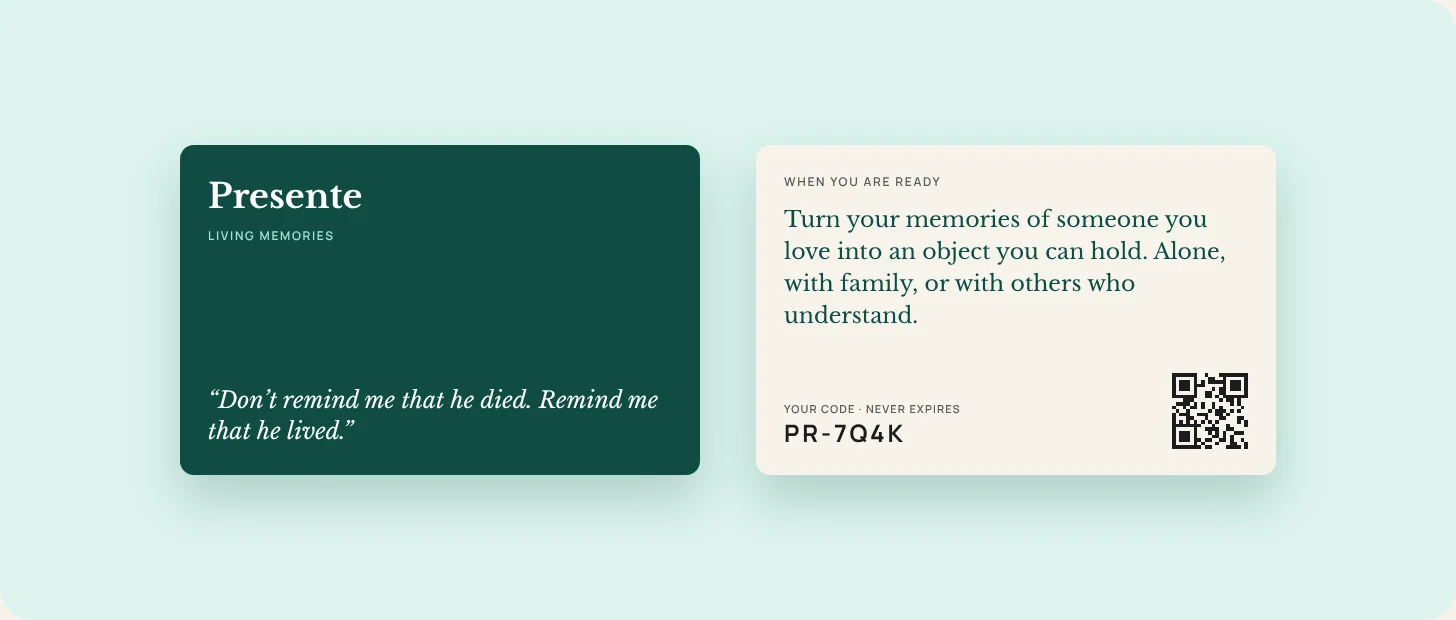
A service that helps people in grief turn their memories of a loved one into an object they can hold: alone, with family or with others who understand.
Postgraduate project · BAU Barcelona, 2017 · redesigned in 2026
Service designUser researchCo-creationService blueprint
How might we support people in grief through creativity and the memories they keep?
(The story in 30 seconds)
From Problem to Solution
01 · The problem
A short film. Words a grieving person hears (paperwork, condolences, “be strong”) crowd a dark screen, and a quote from the research appears: “There is no manual for getting over grief.” Then the Presente service unfolds: a card from the funeral home, memories gathered in the app, stories added by the family, layers of a 3D-printed object coming together, and the finished memory stone with a new layer added on the anniversary.
01 · The problem
Grief Has No Manual
Death is still a taboo, so many people go through grief without any help.
Traditional therapy makes some people feel like patients, and it doesn’t fit every life or every pace.
People fear forgetting: the voice, the smell, the small things.
The solution
Memories You Can Hold
A guided way to gather memories, at your own pace.
Family and friends can add the stories you didn’t know.
A maker helps you turn them into an object of your own: there is no single result.
Context
The brief
The final project of the postgraduate course in Innovation and Design Thinking at BAU, Barcelona: design a service that improves people’s lives.
Audience
People who have lost someone close and are open to support that doesn’t feel like a treatment.
Goal
Use creativity, technology and objects to strengthen the bond with the person who died, and so help people through grief.
Note
Research, workshops and the first service were made in 2017 with Diego Castañeda, Laura Espejo, Jerónimo Garzón and Laura Piñana. In 2026 I redesigned the final service on my own, from the same research.
02 · My role
Service Designer
In the team, I worked on the research and interviews, designed and ran the co-creation session and the prototypes, and built the service blueprint and business model. For this portfolio I went back to that research and designed a new version of the service.
03 · Process
Discover → Define → Develop → Deliver
Discover: Understanding Grief
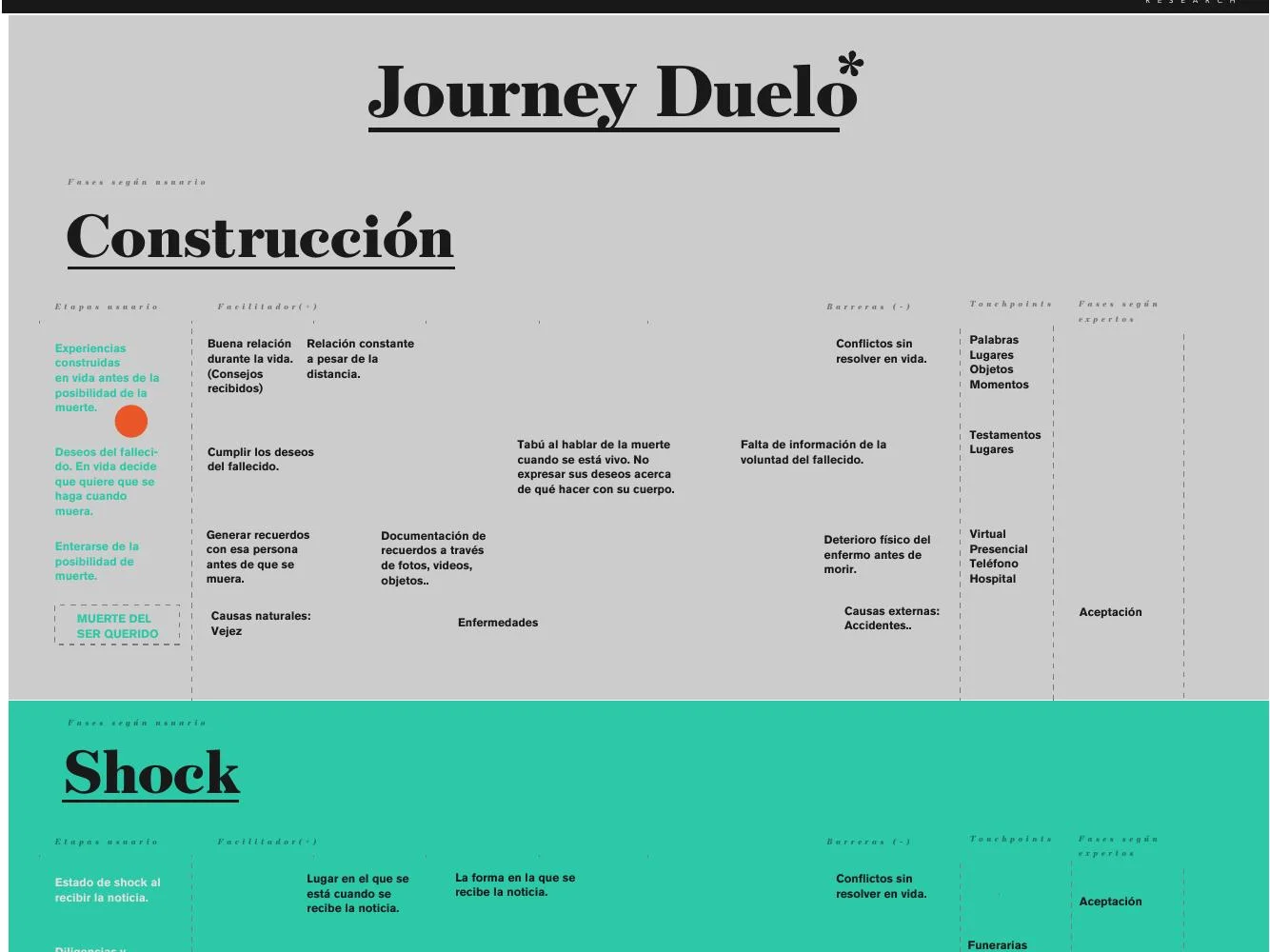
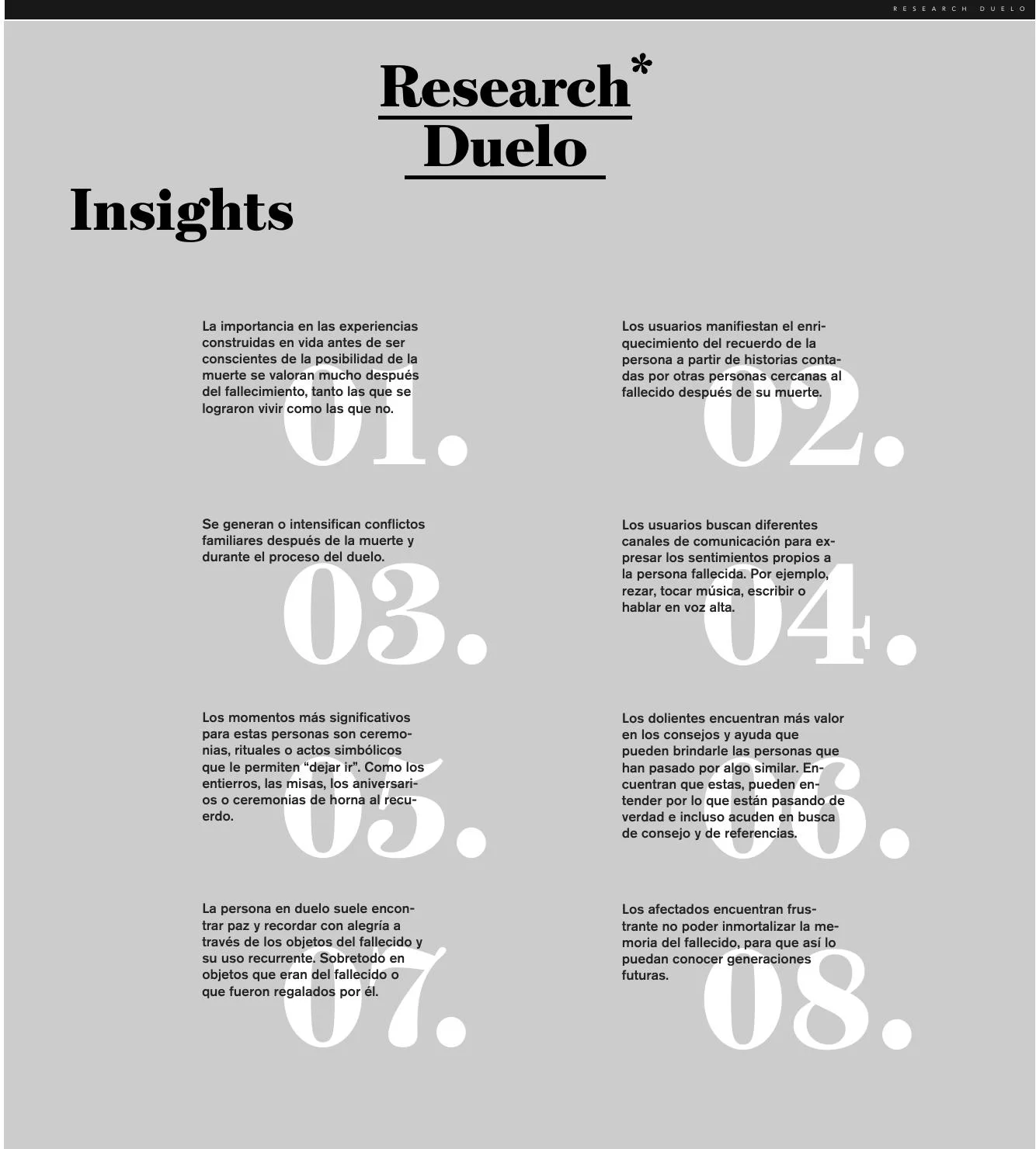
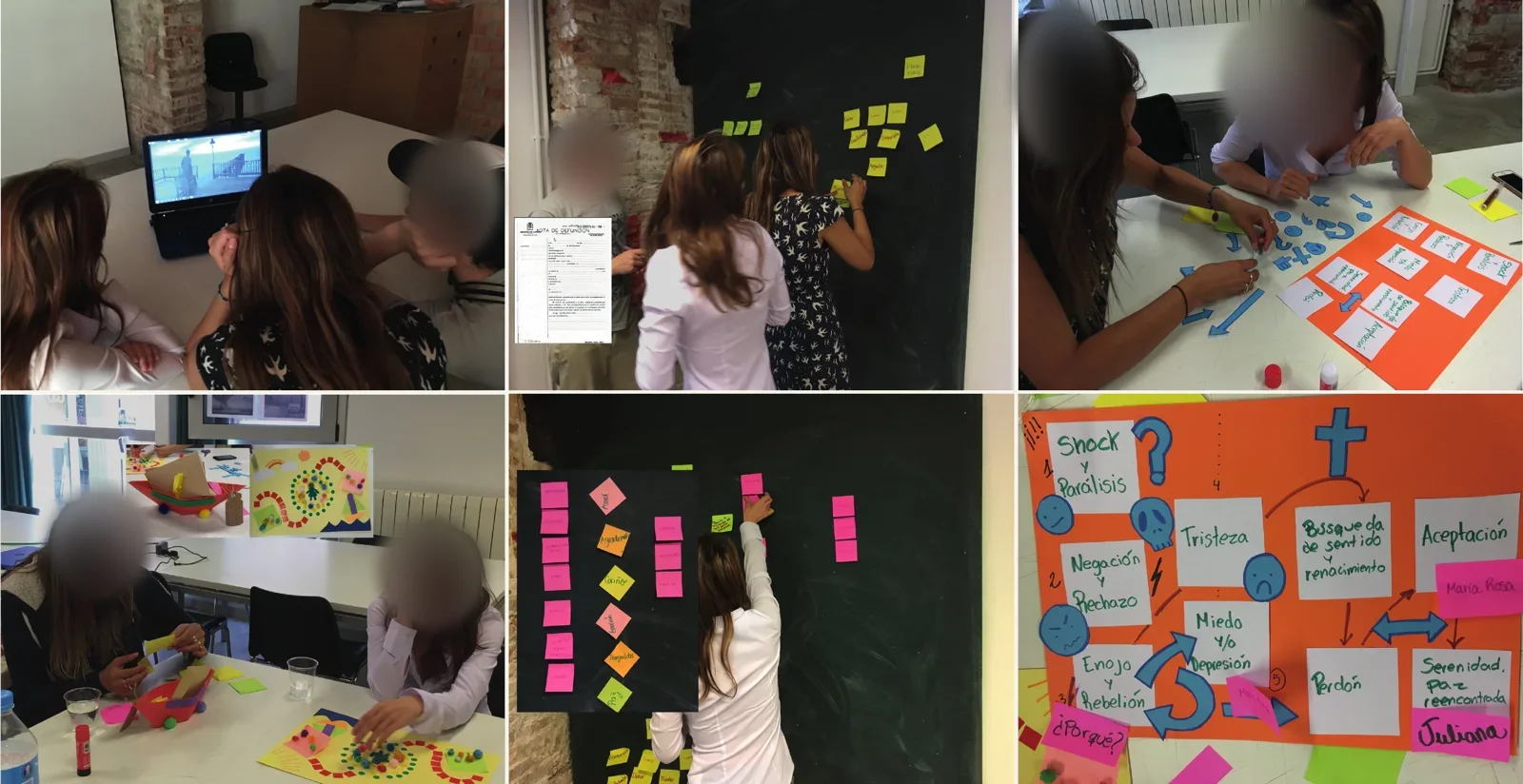
We started with the maker movement and turned towards grief when we saw how much emotional value self-made objects carry. We spoke with two psychologists, interviewed people who had lost someone, studied art therapy and how other cultures mourn, and mapped grief as a journey: from shock to a new life.
The grief journey map, 2017.
Eight insights from the grief research.
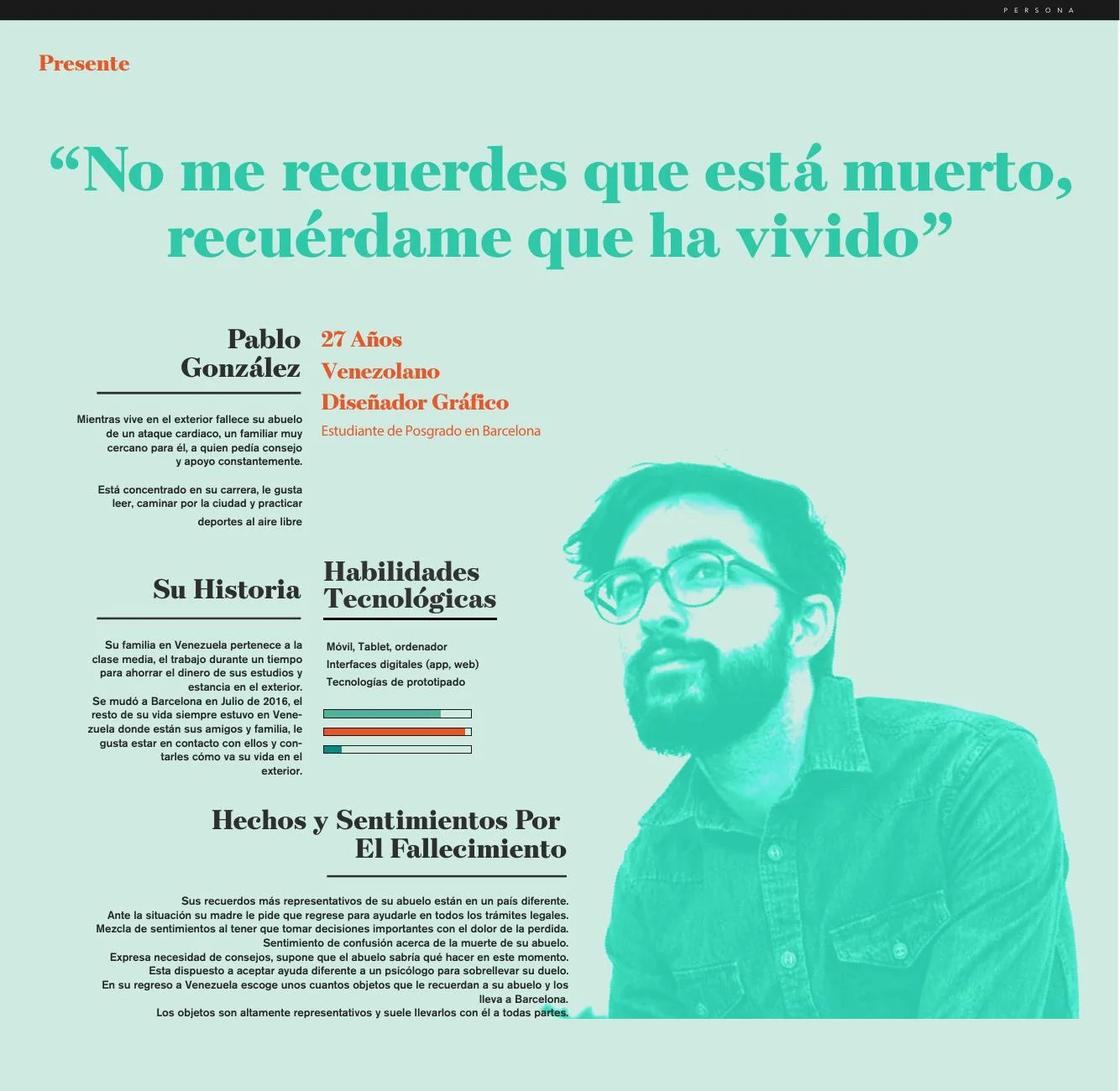
Our persona, Pablo: “Don’t remind me that he is dead, remind me that he lived.”
Define: Co-creating and Prototyping
A co-creation session in Barcelona showed that physical objects mattered far more than digital ones. After a brainwriting session we had three paths. We tested them with two prototypes: in one, participants prepared a legacy for someone else; in the other, people in grief documented their memories for two days and tried to turn them into an object.
Prototype 1 at BAU: a diagnosis, a legacy, a surprise.
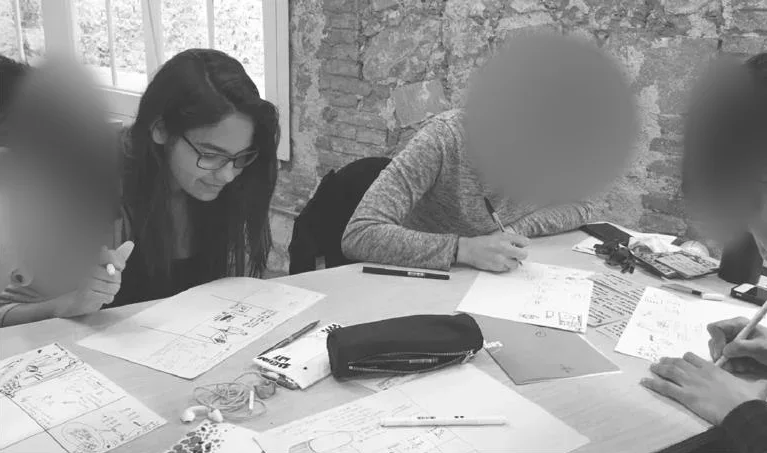
Brainwriting.
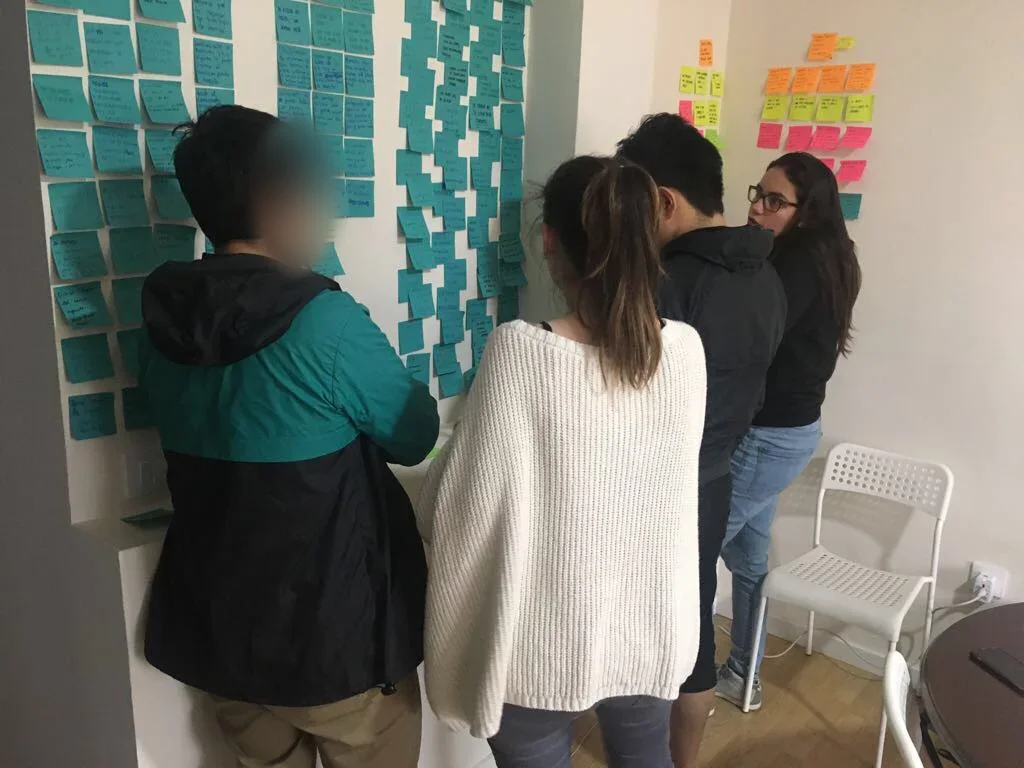
Clustering the research.
Develop: The First Service
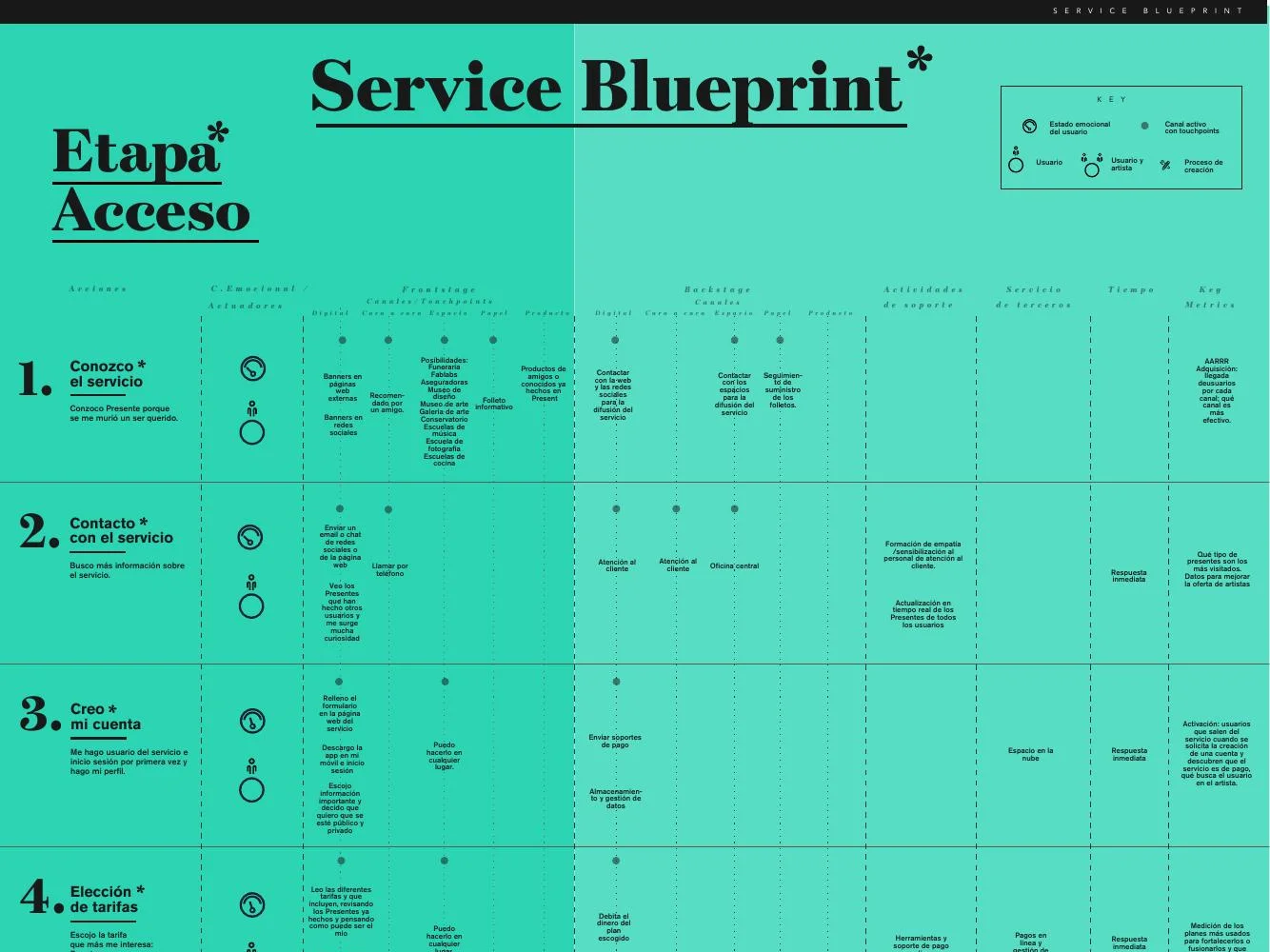
The 2017 version matched people with an artist through a website with three price plans. It was rich in research, but the solution was mostly an online shop: the relationship with the artist was a chat, the family stayed outside, and the service ended at delivery, while grief goes on.
The 2017 service blueprint.
The 2017 stakeholder map.
The solution · 2026
Five Moments, Not a Straight Line
The new Presente keeps the heart of the research (memories made tangible) and adds what the first version missed: the right timing, the family, people who understand, and a reason to come back every year.
What Pablo doesGets a card at the funeral home. Opens it three weeks later, when he is ready.Answers one gentle prompt a week: a smell, a song, a phrase his grandfather used.Invites his mother and cousins, and reads stories he never knew.Shapes the object with a maker, online and in a fablab workshop.Receives it on his grandfather’s birthday. Each year, a new layer.
Insight behind itShock is not the moment to sell anything.Memories live in smells, songs and small objects.Stories from others make the memory richer.Many could not build what they imagined alone.Rituals and anniversaries help to let go.
Grief comes in loops: the service lets you go back to any moment.
One Service, Eight Touchpoints
The cardGiven at the funeral home or by the insurer. A code that never expires: you start when you are ready.Physical
The appA private place for memories: photos, voice notes, writing, a song.Digital
The memory boxThe same prompts on paper, for people who would rather write by hand.Physical
The circleFamily and friends add their stories. Each person decides what to share.Digital
The makerAn artist trained in grief turns the memories into a form, with you.Person
The workshopFour sessions in a fablab with an art therapist and a small group.Person
The objectWhatever fits the memories: a stone, a pendant, a small sculpture. 3D printed, so the family can have replicas.Physical
The anniversaryEach year the circle shares a memory, and the stone can grow by one layer.Digital
Service Blueprint
Layer
01 Arrive
02 Gather
03 Invite
04 Create
05 Receive & remember
Evidence
Card in a sympathy envelope
App · paper memory box
Invitation link · shared wall
Sketches · 3D test print · workshop kit
The object · replicas · a yearly layer
Person in grief
Keeps the card; activates the code when ready. Chooses: alone, with family or in a group.
Invites family and friends; decides what each person can see.
Picks a maker; co-creates online, in the studio or in a workshop.
Chooses a meaningful delivery date; orders replicas.
Line of interaction
Frontstage
Funeral home staff hand over the card, with no sales talk.
Prompts adapt to the stage of grief the person reports.
Gentle invitations that can be declined; no notifications at night.
A maker trained in grief; an art therapist leads the workshops.
A delivery ritual; an anniversary message to the circle.
Line of visibility
Backstage
Partner onboarding and training.
Memory library, prompts and privacy settings.
Moderation and support with family conflicts.
Maker matching; a brief from the memories; a psychologist on call.
Print lab, quality check and courier.
Support
Funeral homes, insurers, hospitals
Cloud storage · advice from psychologists
Community guidelines
Maker network · fablabs
3D print partners · courier
The Object: Every Presente Is Different
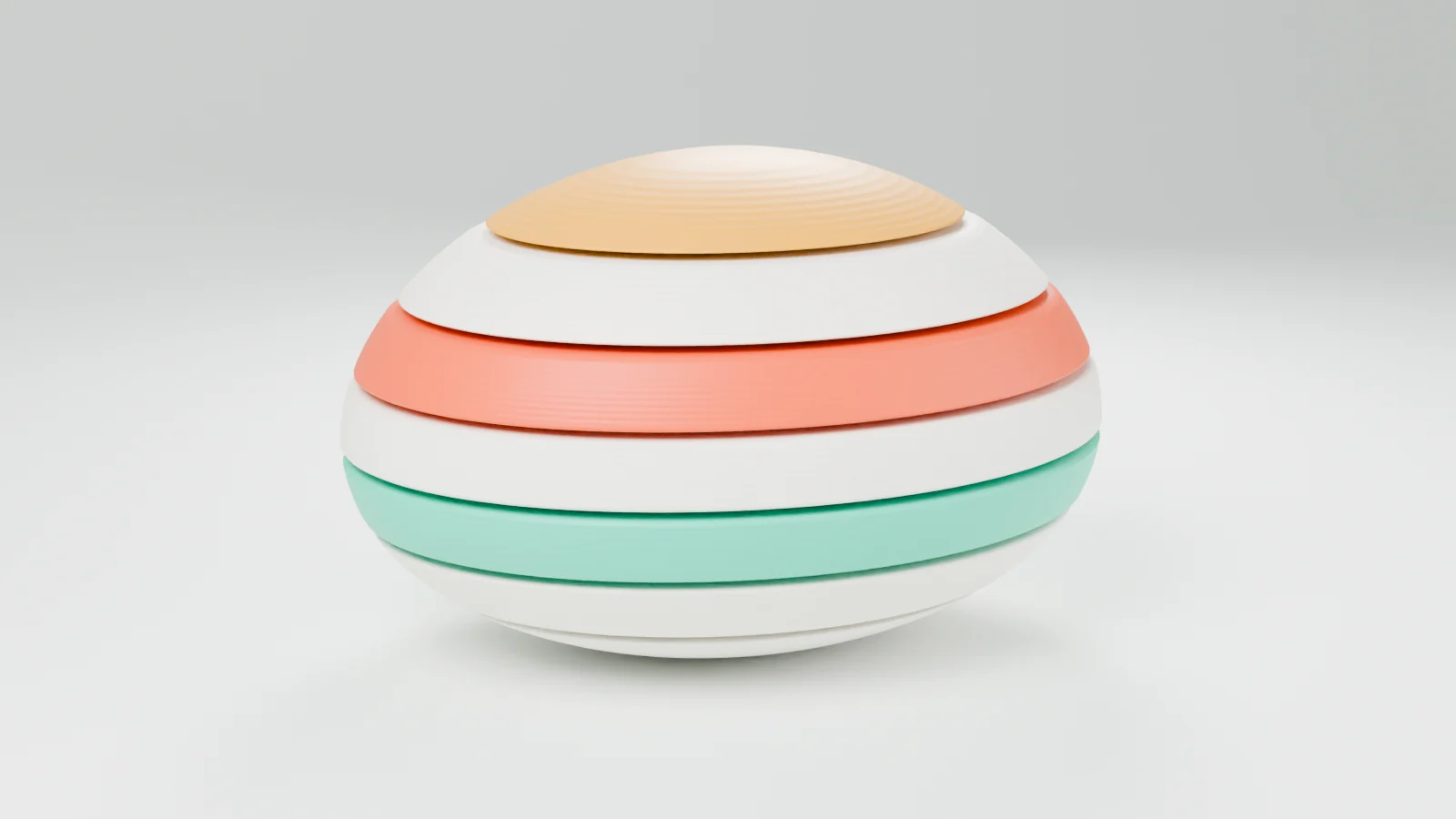
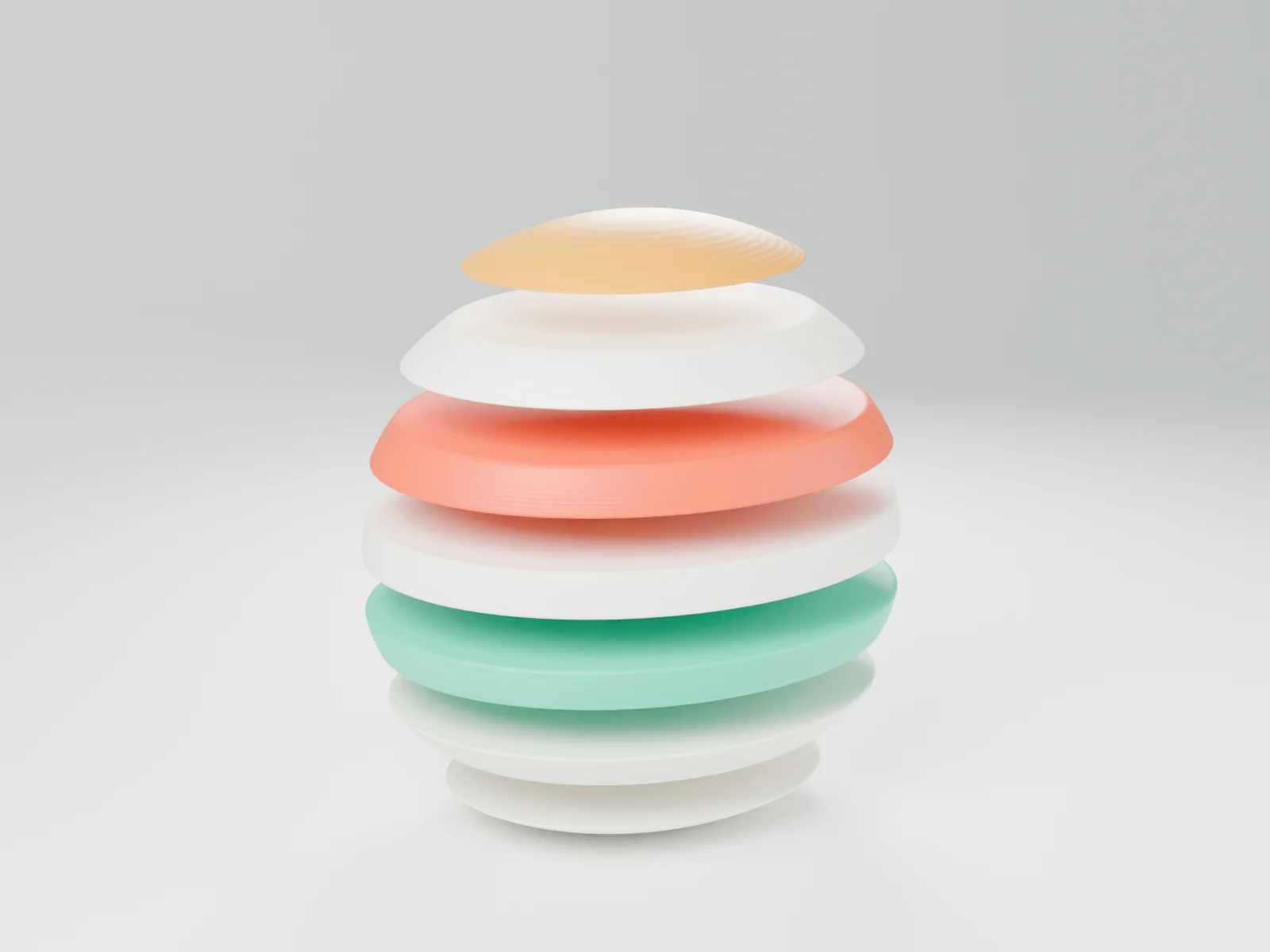
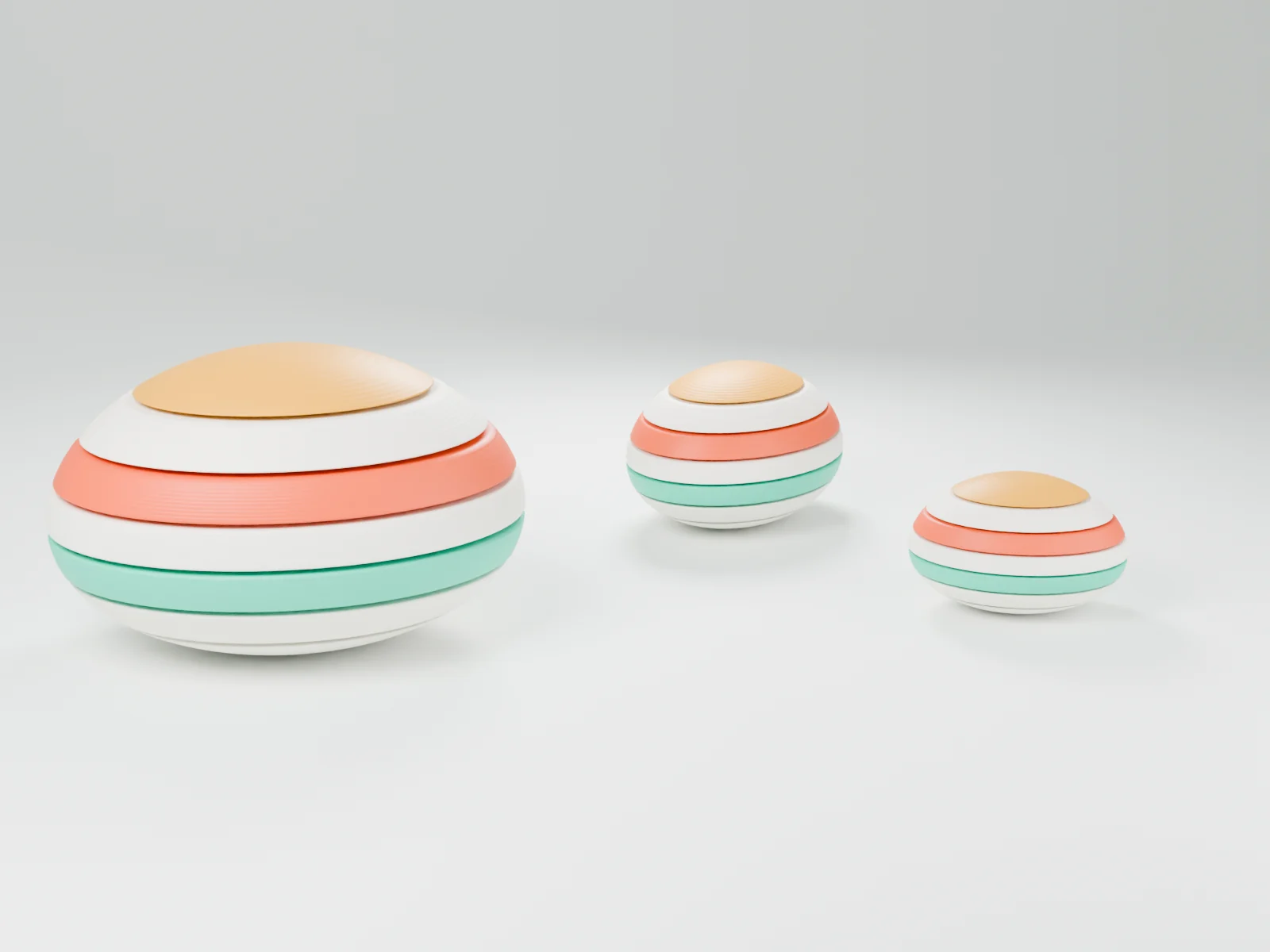
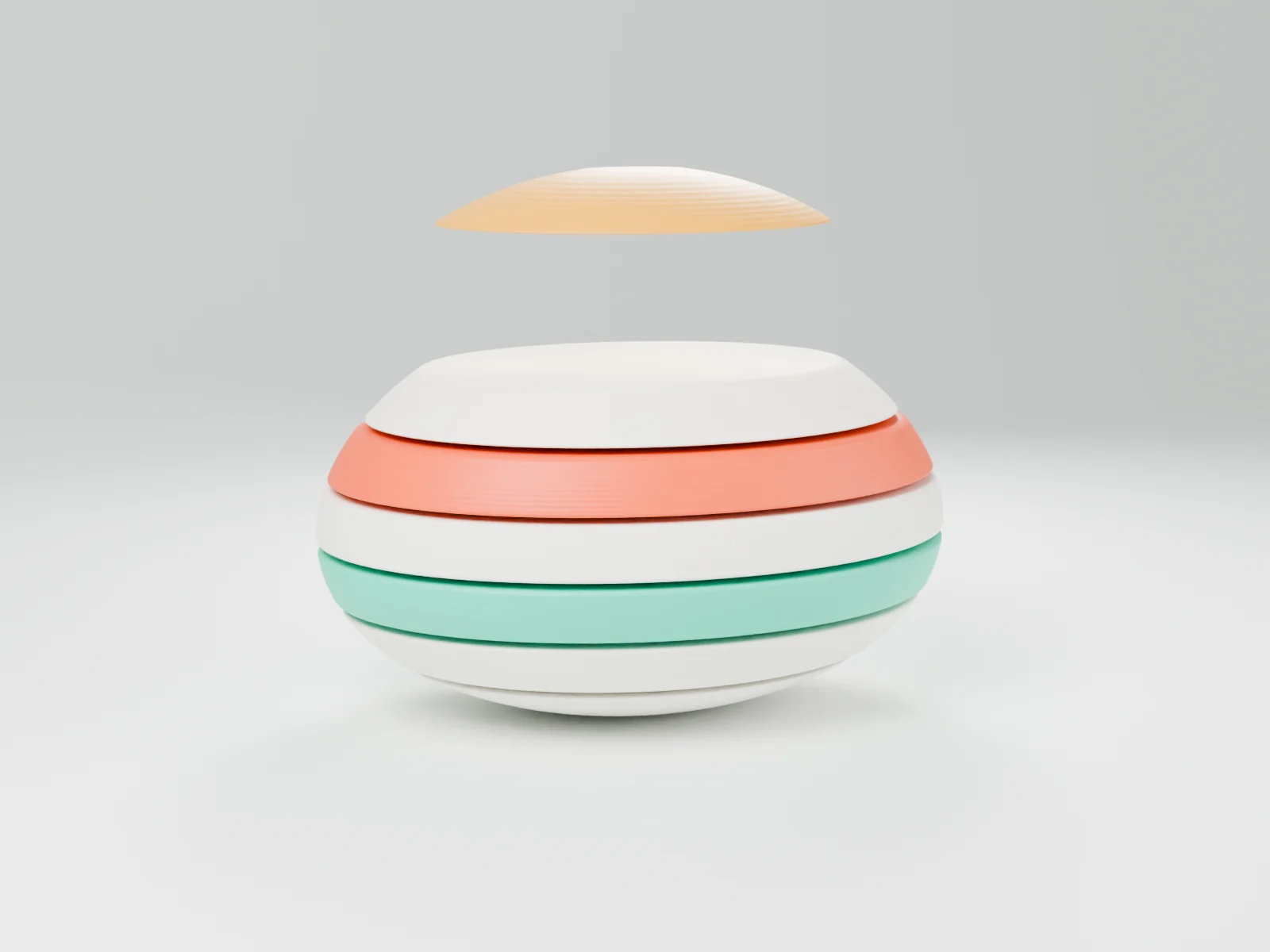
There is no single result. Each person creates the object that fits their memories and what they want to express. Pablo’s memory stone is just one example: one layer for each chapter of memories, and a new layer every year. Every object is 3D printed, so the family can have copies: the psychologists warned that losing a one-of-a-kind object can reopen the wound.
Pablo’s stone: seven layers, seven chaptersReplicas for the familyA new layer on the anniversary
Other Stories, Other Objects
Three more examples, inspired by objects that participants imagined in our 2017 prototypes.
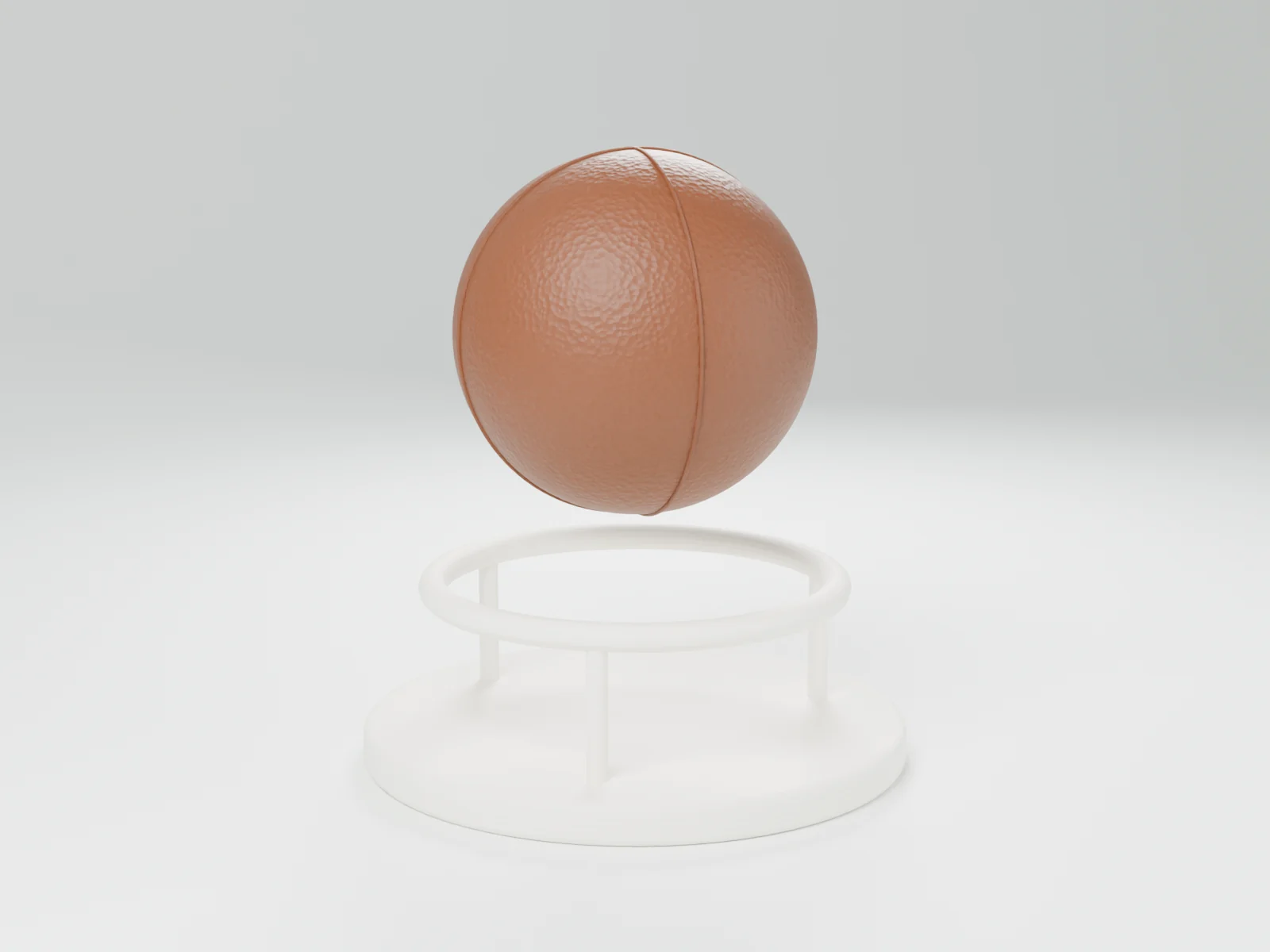
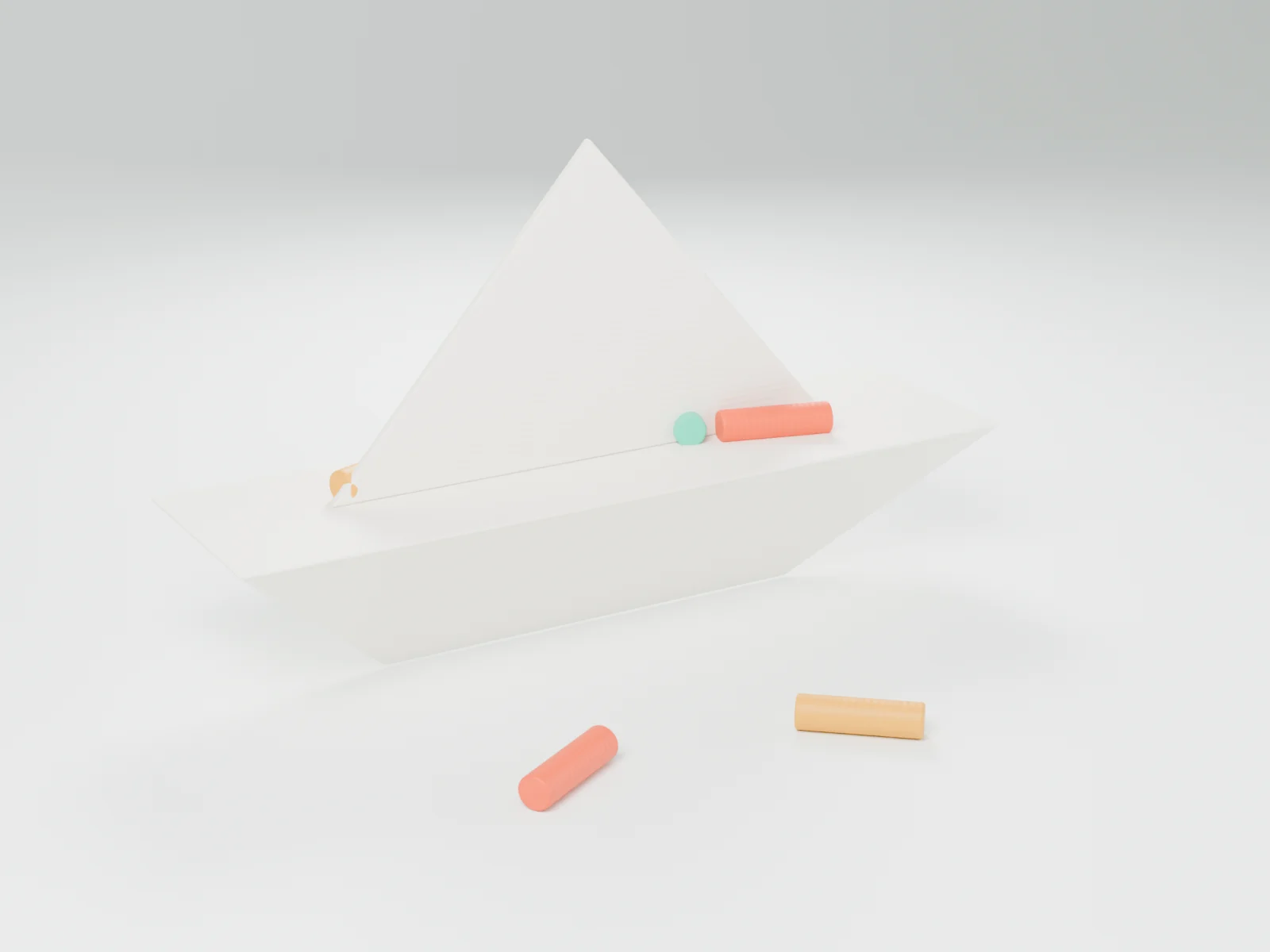
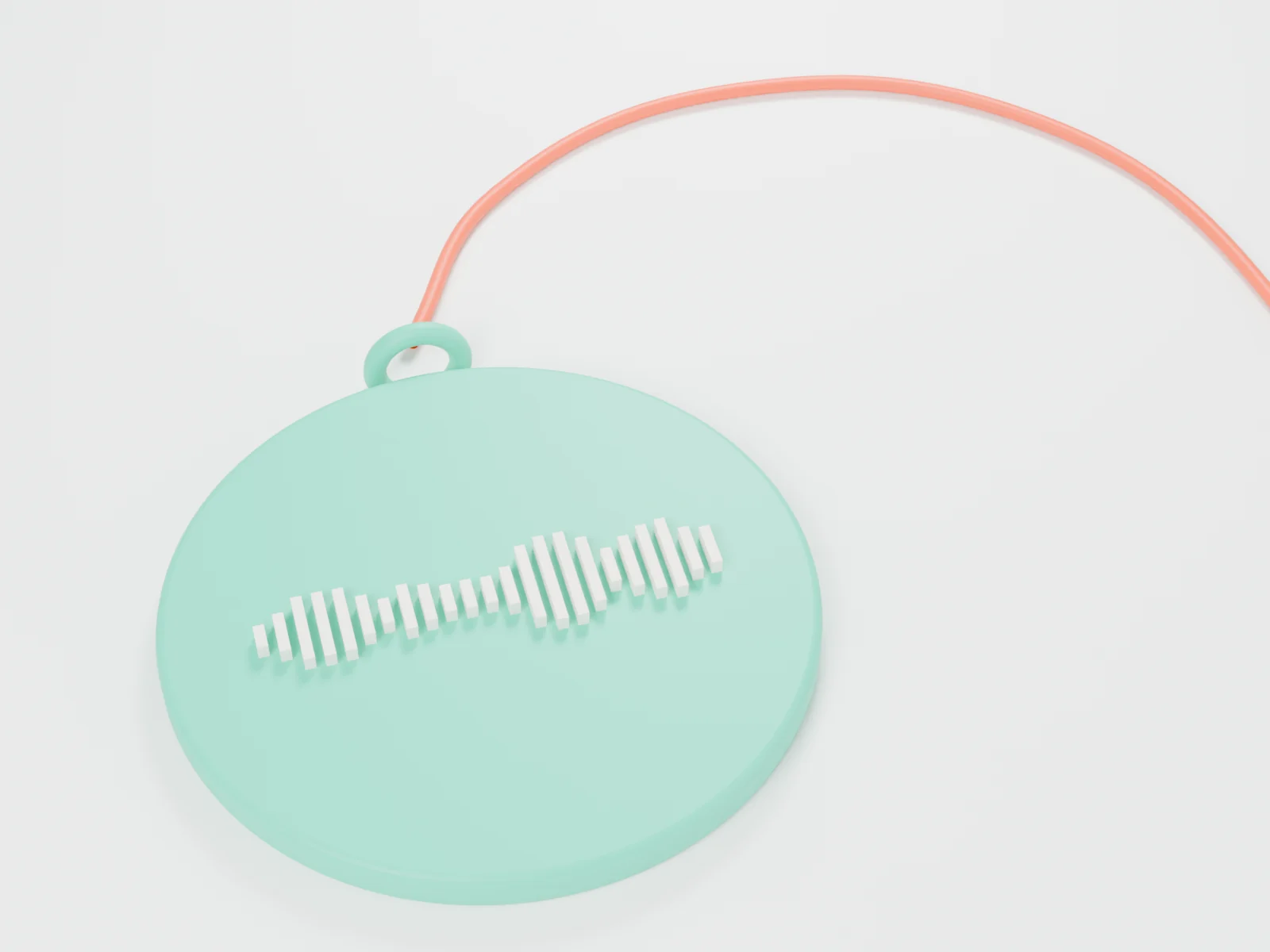
For a father: a leather ball that floats, because thinking of him brings calm.For a nephew: a paper boat full of advice, one note for each birthday.For a grandmother: the waveform of the song she always sang.
The App and the Card
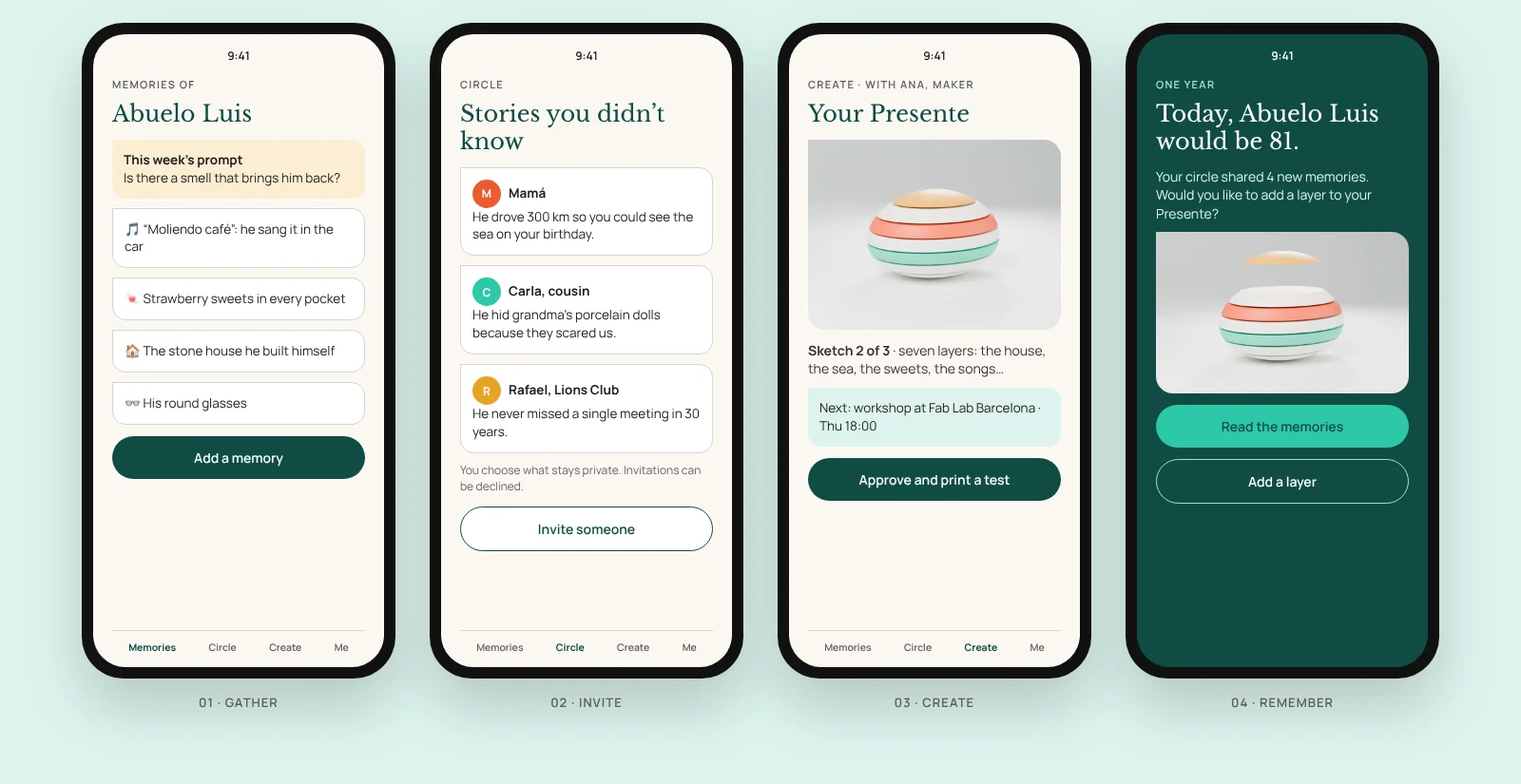
Gather, invite, create, remember.
The card: an invitation that waits for you.
04 · Outcome
What Changed in the Redesign
The research stayed; the answer grew. The first service ended when the object arrived. The new one starts when the person is ready, includes the people around them, and comes back every year.
13insights from interviews, desk research and two psychologists
3participatory sessions: co-creation and two prototypes
8touchpoints in the new service, digital, physical and human
05 · Reflection
What I Learned
With a topic this delicate, recruiting is the hardest part. Testing with real situations, even role play, gave us reactions no survey could.
Grief is not linear, so a service for it can’t be a funnel. It has to let people pause, go back and return.
Looking at my own work years later, I saw that good research can still lead to a thin solution. The redesign is the answer I would give today.